The problem. Garment quality control on an RMG line is manual and subjective — inspectors measure finished pieces by hand against a spec sheet. It's slow, it varies person to person, and at production volume you can only ever sample a fraction of what you ship.
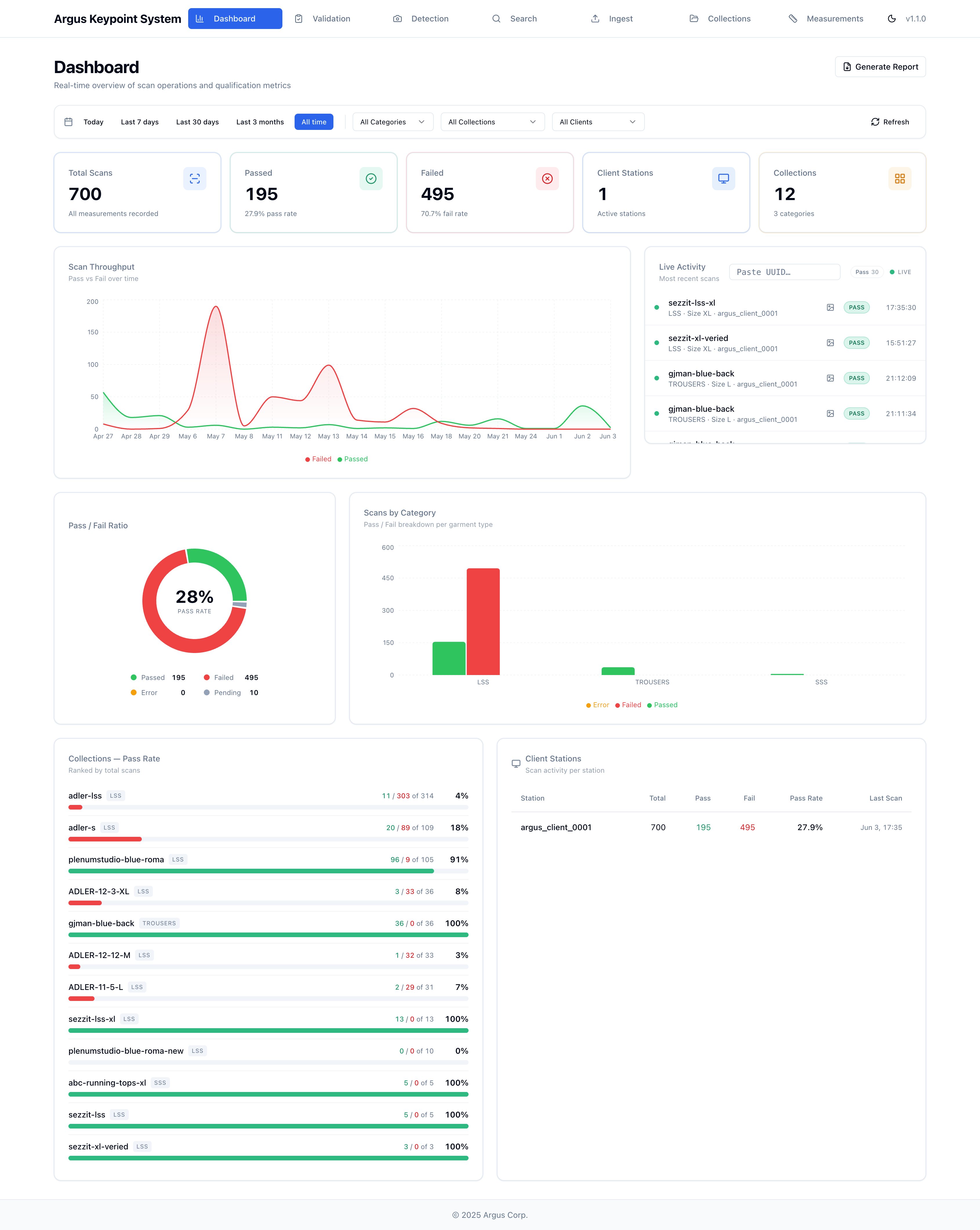
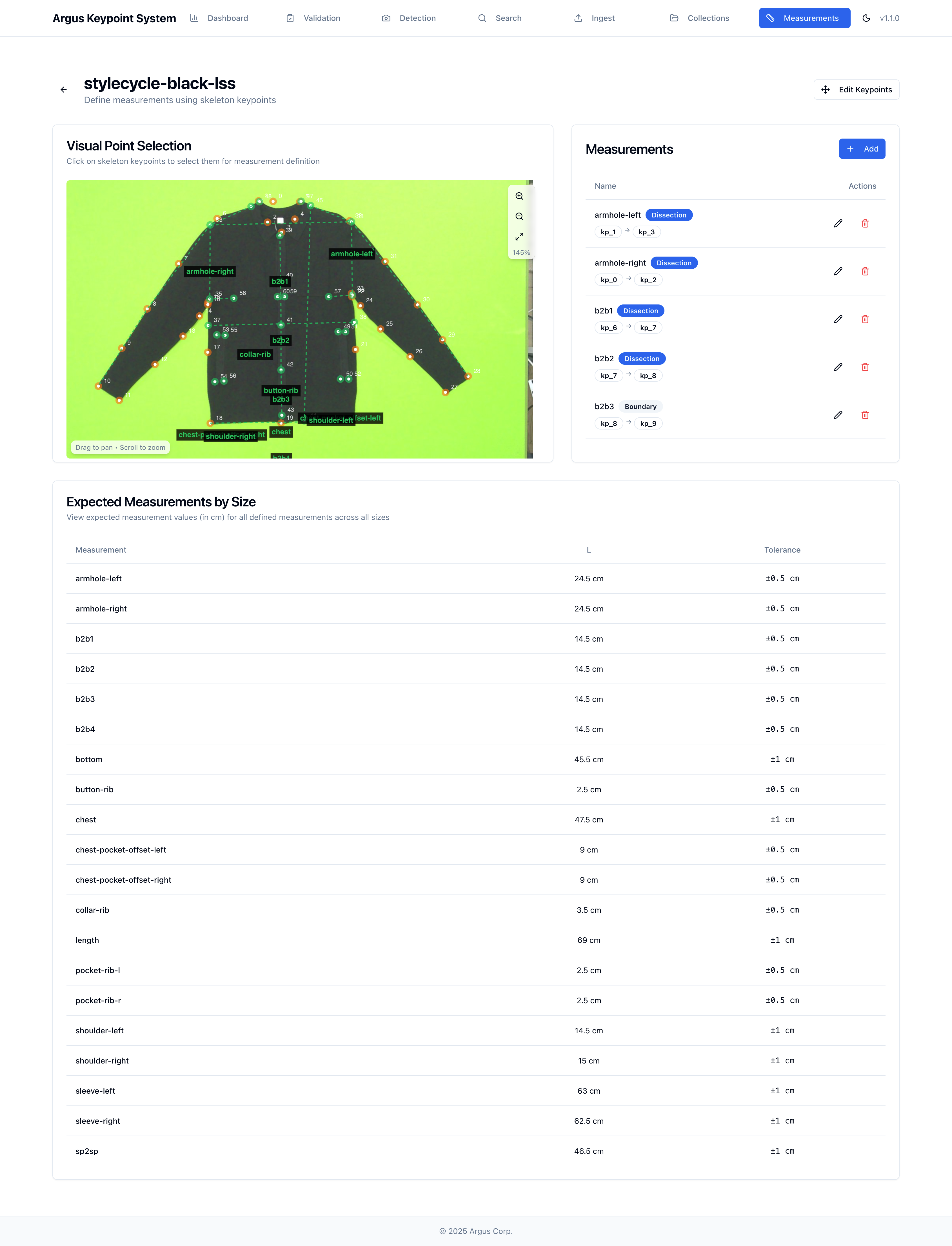
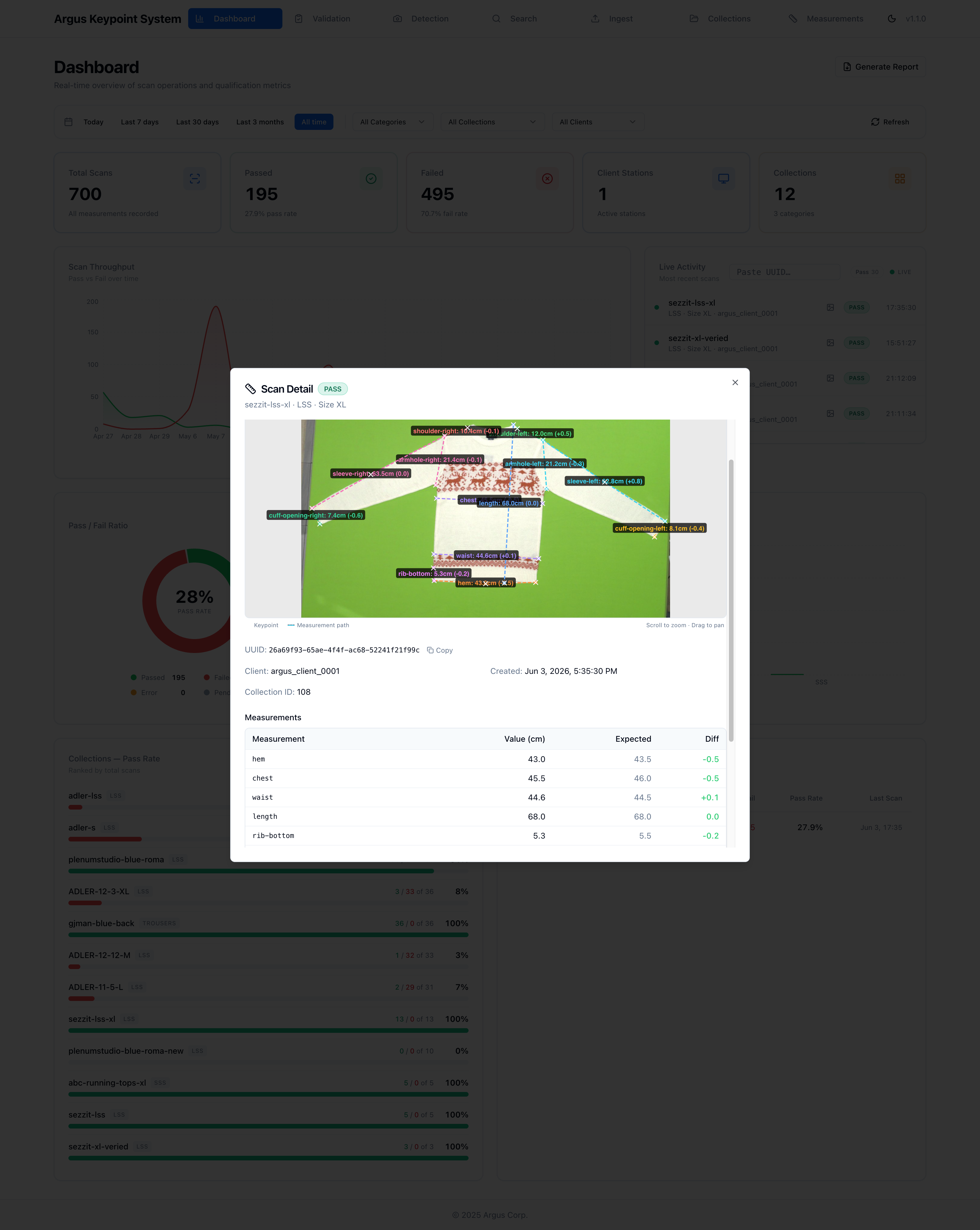
What it solves. Argus is the world's first AI-powered garment measurement system built on Structured Light 3D sensing: it captures a garment's true geometry and reports measurements automatically, reaching 93.5% accuracy compared to human inspectors — objective, repeatable QC that can run inline instead of on a sampling table.
Challenges & how we overcame them
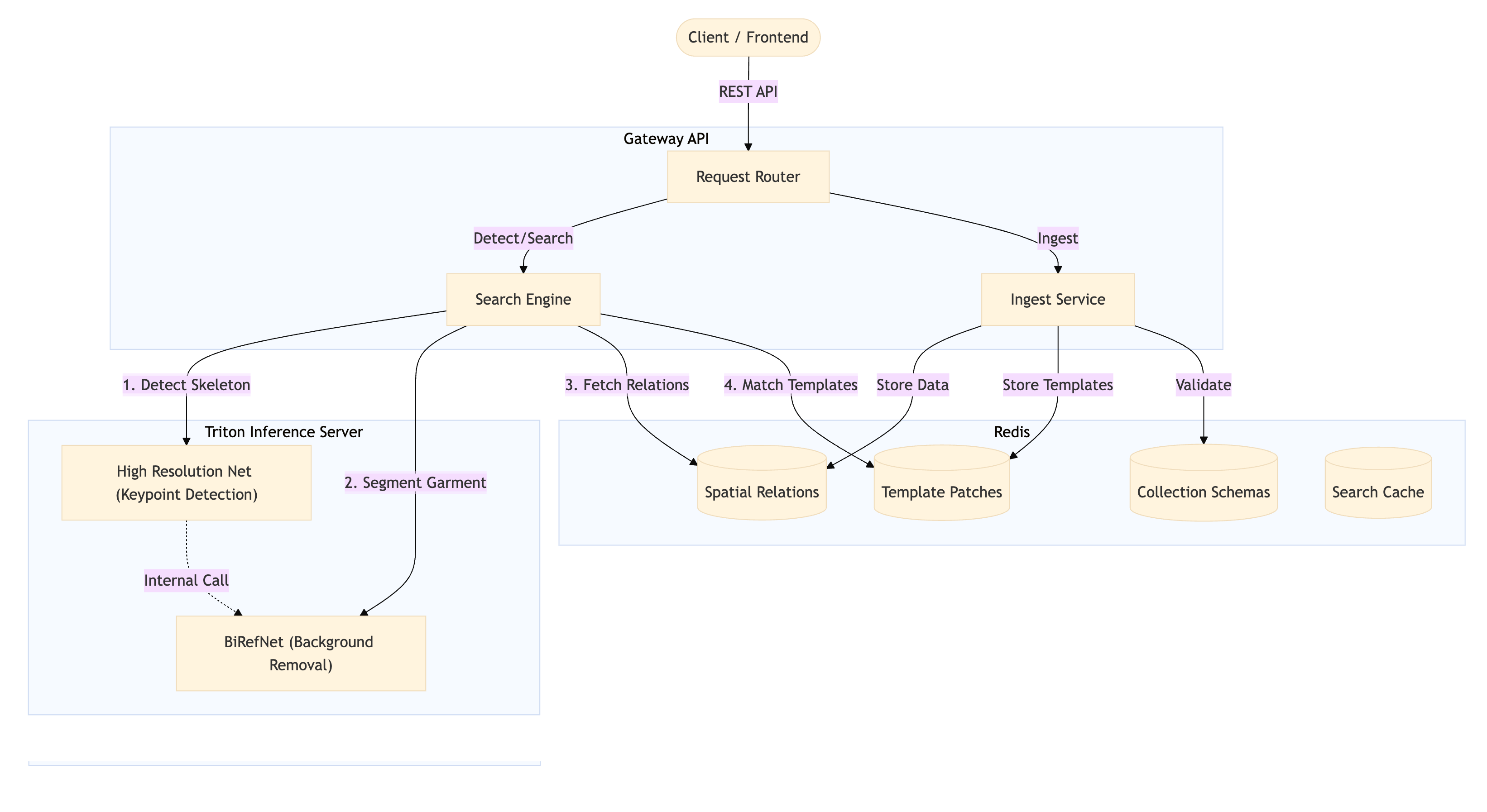
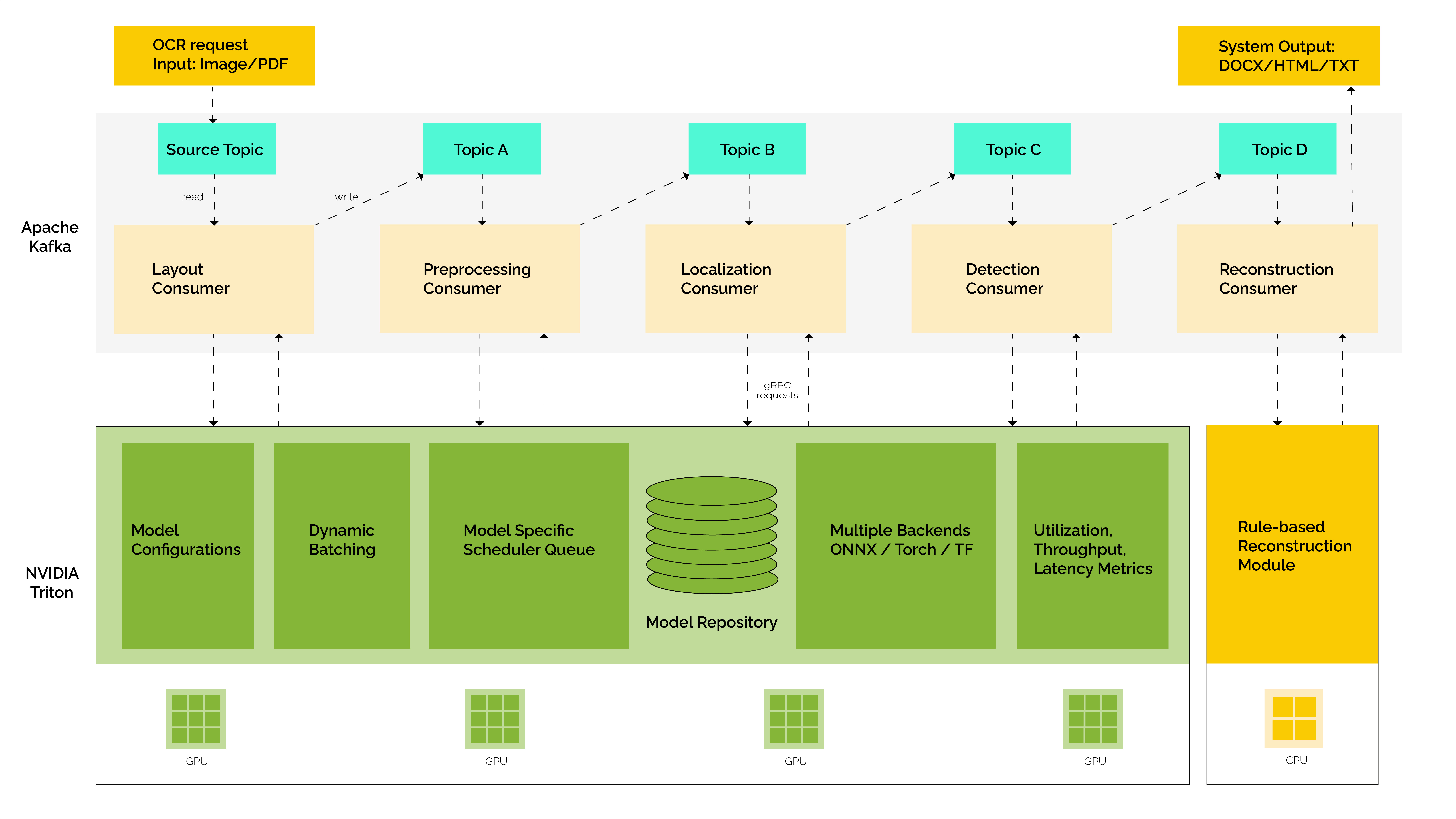
- Real-time inspection can't wait on slow inference. The first pipeline took 4.5s per piece — too slow for the line. We optimized it with Nvidia Triton + TensorRT, cutting inference time 82% (4.5s → 0.8s) so measurement keeps pace with production.
- Tape-measure precision from a sensor is genuinely hard. We developed novel finetuning methods using vector embeddings with positional encoding to reach subpixel accuracy — the difference between a demo and a measurement a factory will actually trust.
- It had to convince the industry, not just a benchmark. The system was validated by BGMEA board members and drew 10+ unit backorders before launch — proof the speed and accuracy held up against real QC expectations.
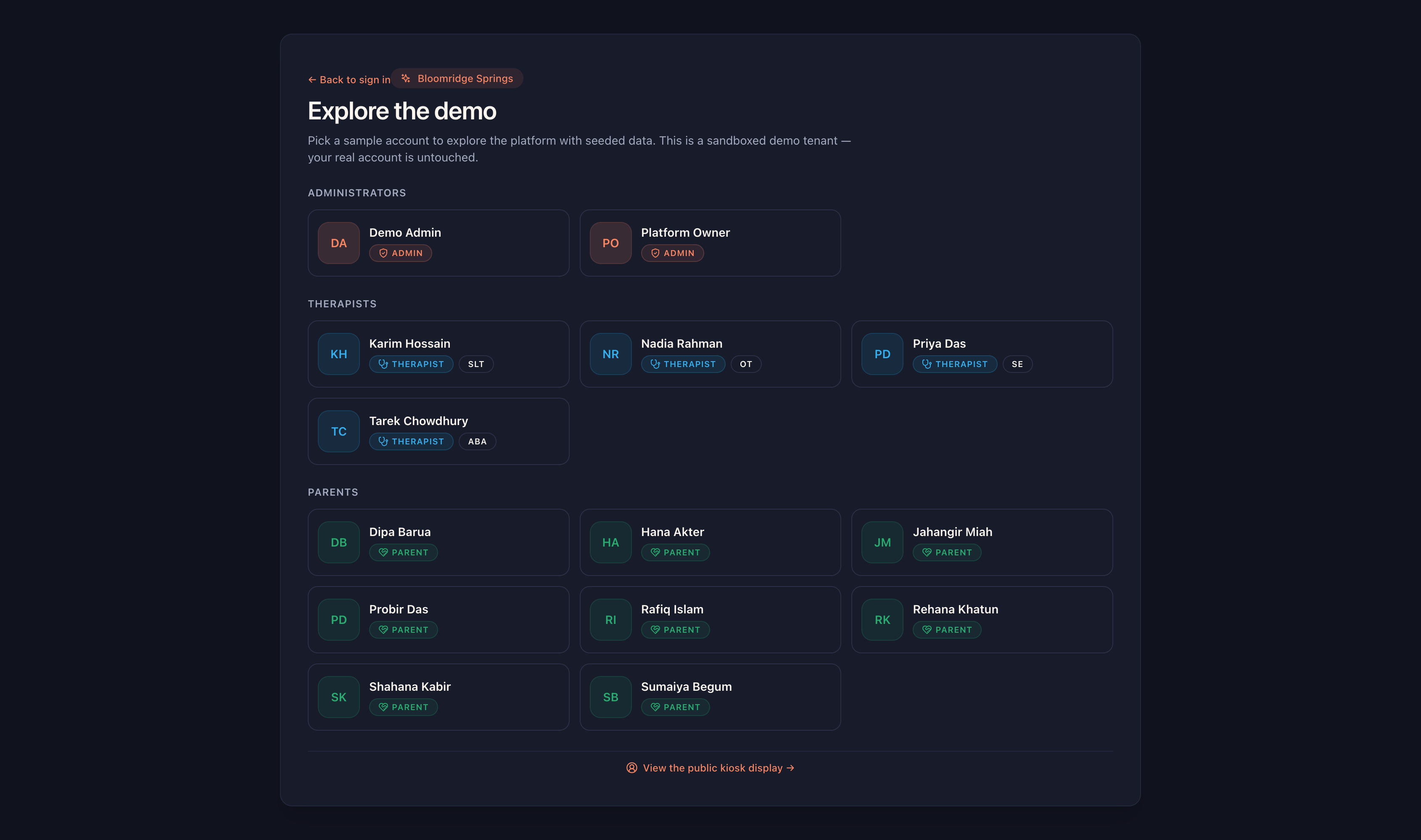
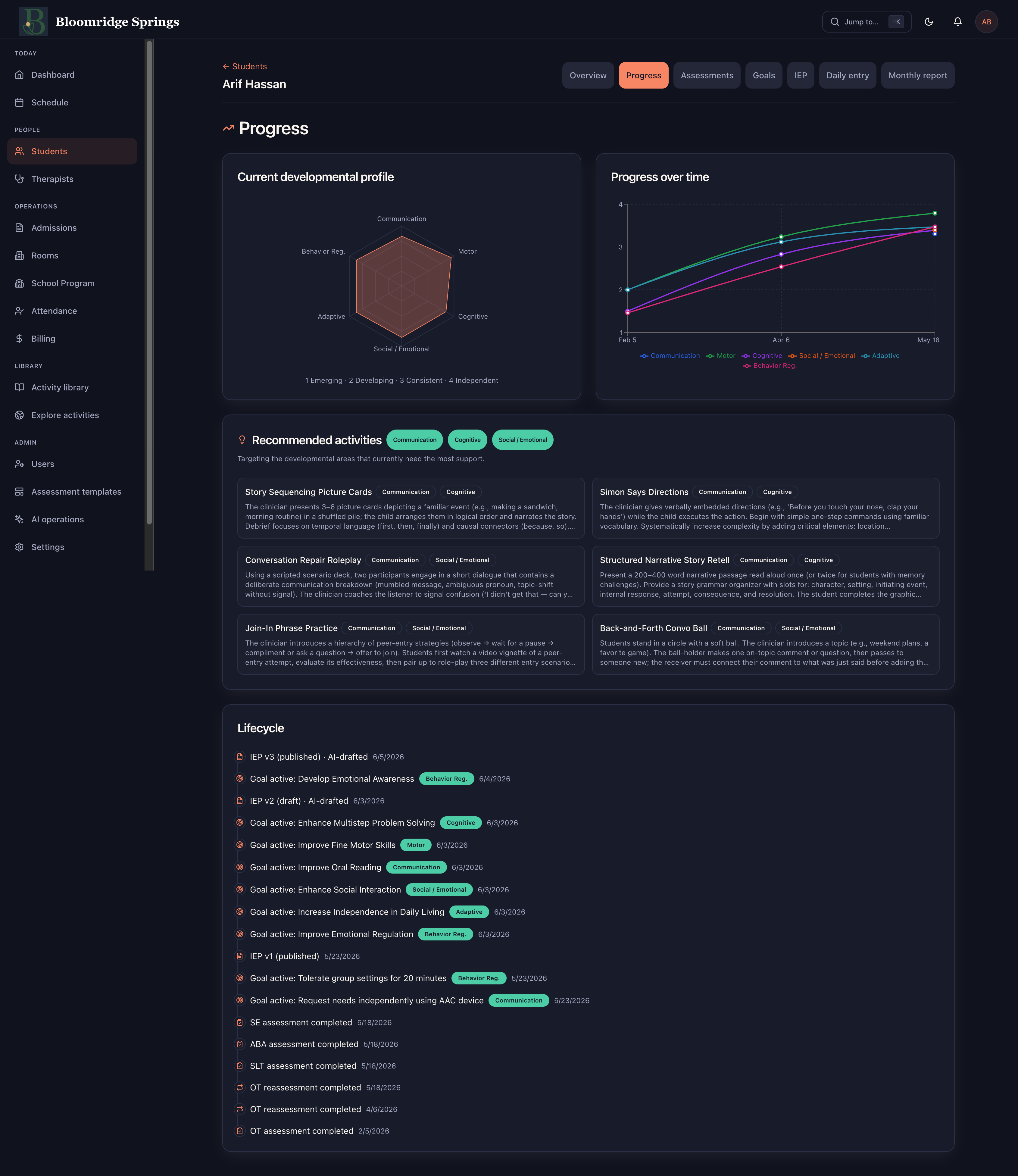
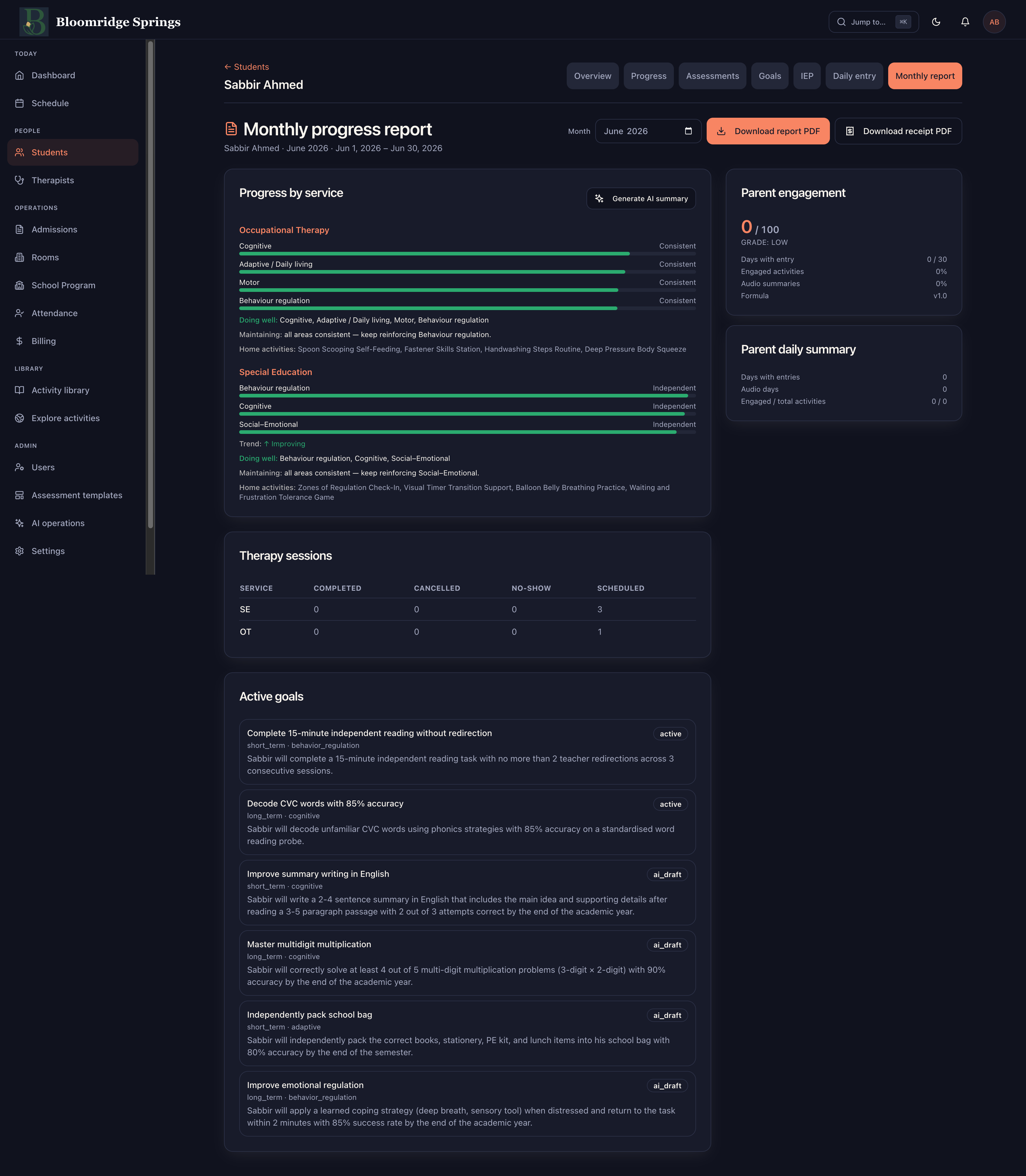
The problem. A special-needs school and therapy center ran its week on whiteboards and group chats. Matching dozens of students to the right therapists — around availability, time-off, room limits and each child's preferred hours — ate 6–7 hours of an admin's day, every day. On top of that sat the clinical paperwork: IEPs, SMART goals, progress notes and monthly reports, all written by hand.
What it solves. One multi-tenant platform that plans the week, writes the first draft of the paperwork, and keeps parents informed automatically:
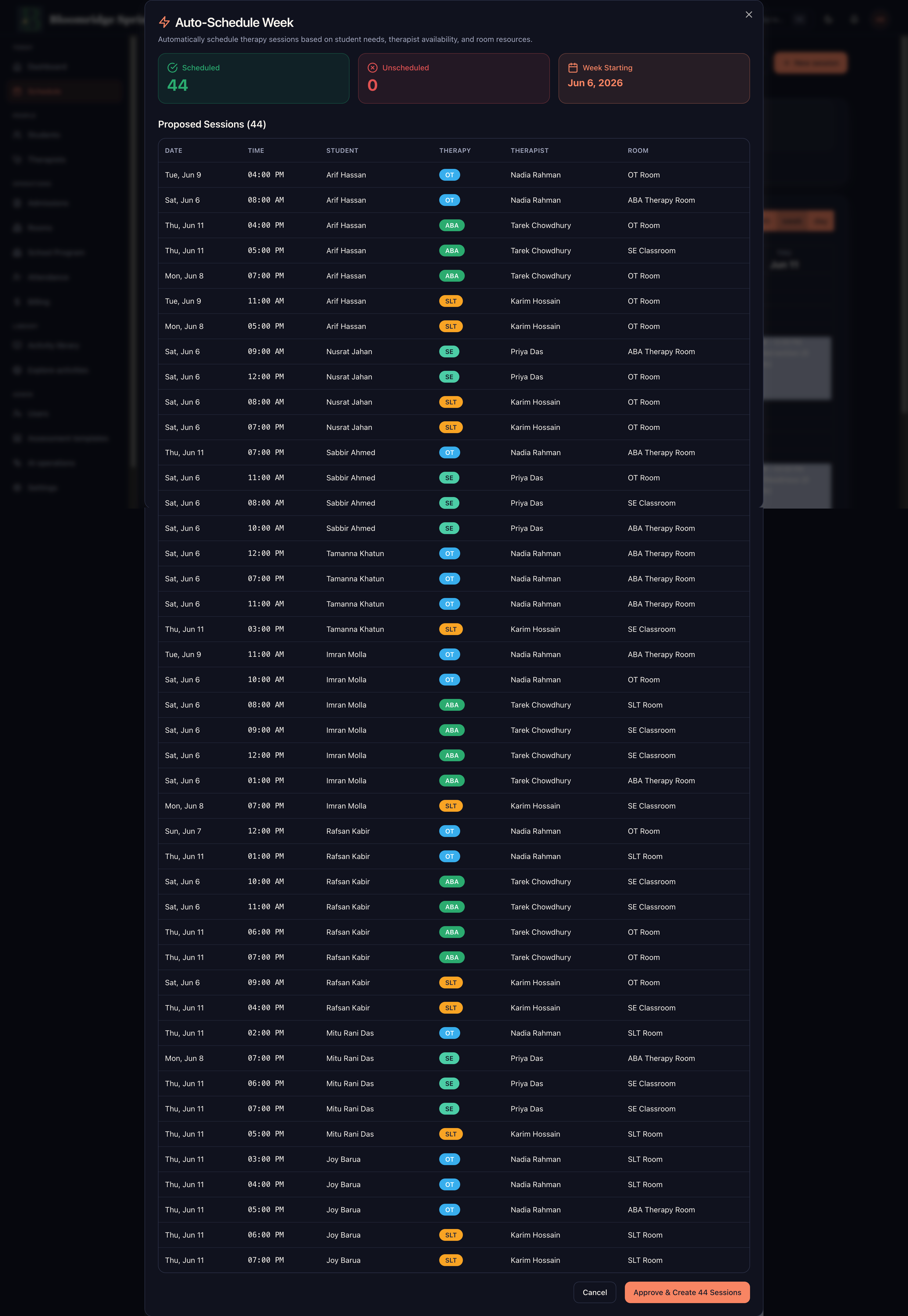
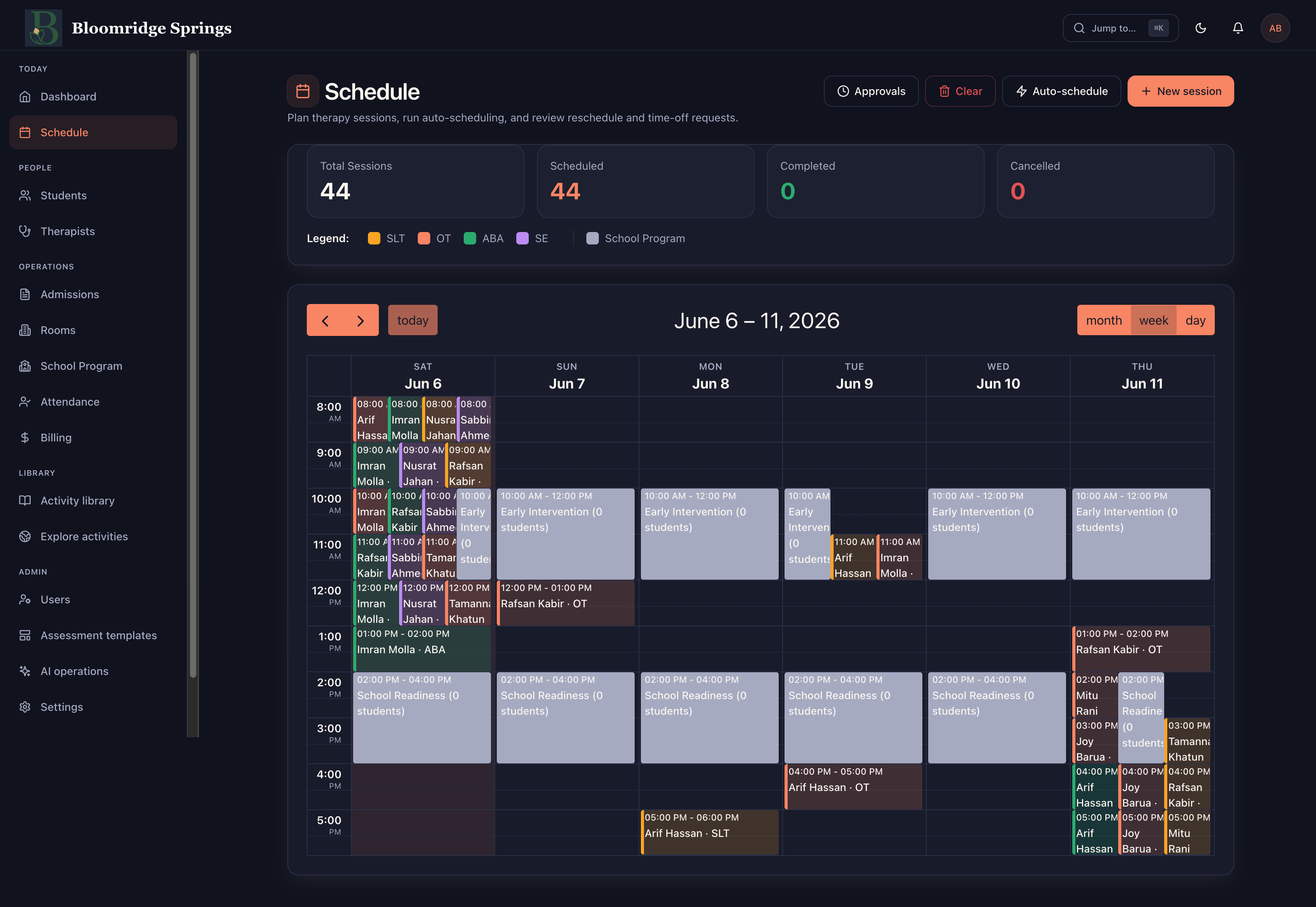
- Scheduling in 2–3 seconds instead of 6–7 hours, with WhatsApp session notifications sent the moment a plan is published.
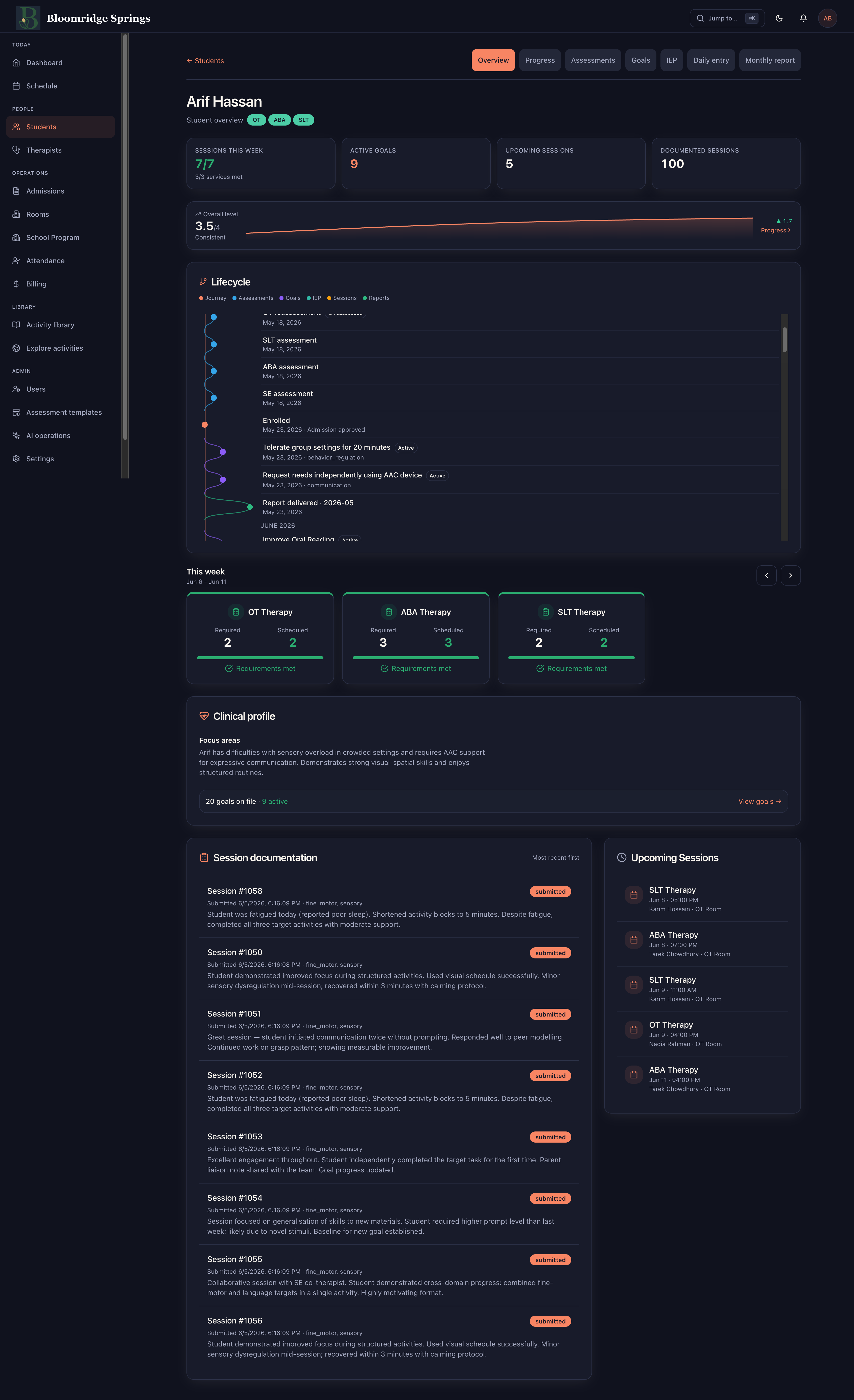
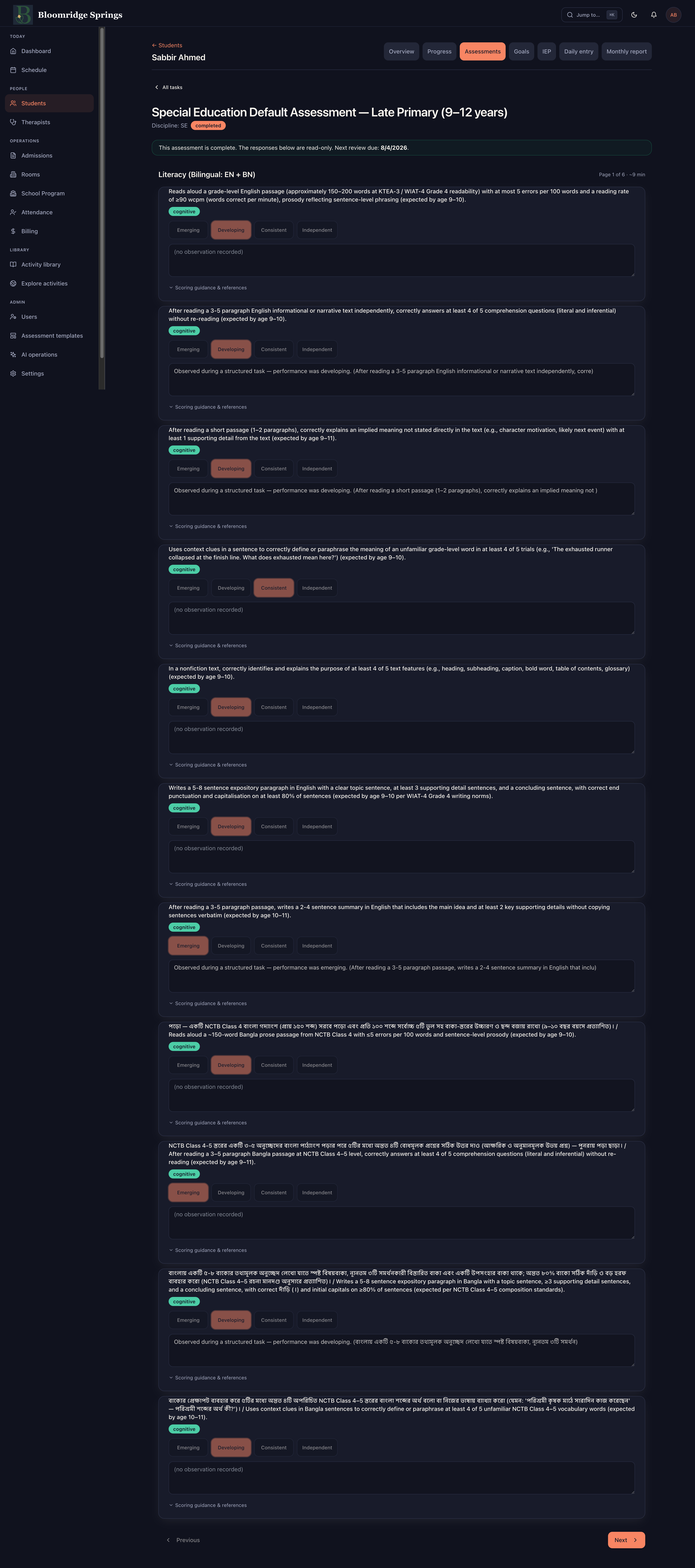
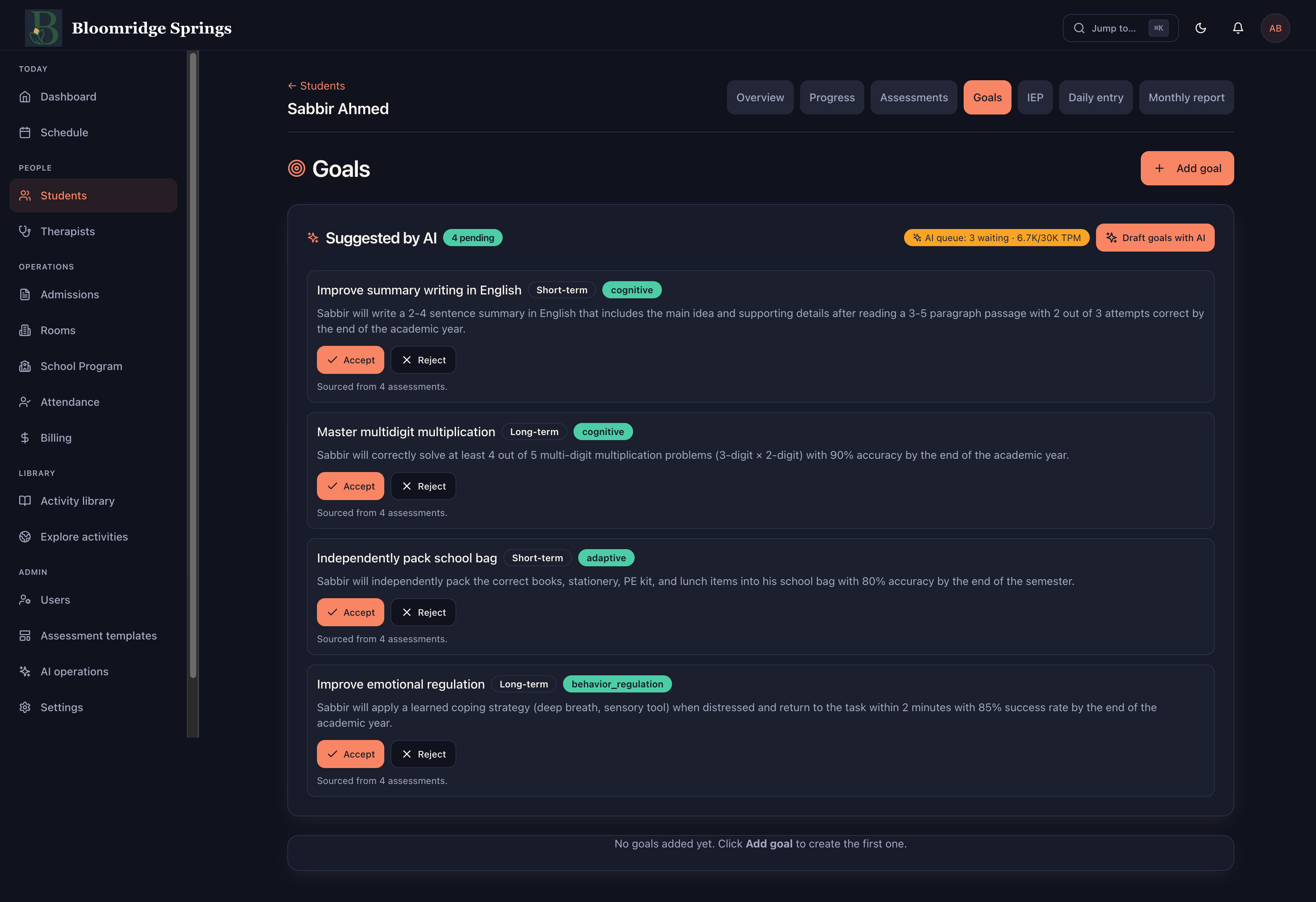
- Agentic documentation that drafts IEPs and goals from real assessment evidence, removing hours of clinical writing each week.
- A natural-language assistant staff can simply ask — "who's unbooked Thursday?", "draft Aarav's next goal" — instead of clicking through screens.
Challenges & how we overcame them
- Scheduling is a real constraint problem, not a sort. A naive greedy matcher produced illegal or lopsided weeks. We modelled it as a true CSP on Google OR-Tools CP-SAT: availability, time-off, room capacity and no-double-booking as hard constraints, then a weighted objective that maximizes booked sessions and rewards each student's preferred slots — turning a daily chore into a solved optimization.
- An AI agent with write access to clinical records is dangerous. We layered defense in depth: role-based tool access (each tool declares which roles may call it) plus a human-in-the-loop approval gate — any tool that mutates clinical data parks in a pending state until an admin releases it. The agent is helpful, never unsupervised.
- AI-written clinical docs can't be free-form. Every IEP and goal the LLM produces is validated against a strict Pydantic schema and persisted as a versioned draft — never auto-published — so clinicians review structured, auditable output.
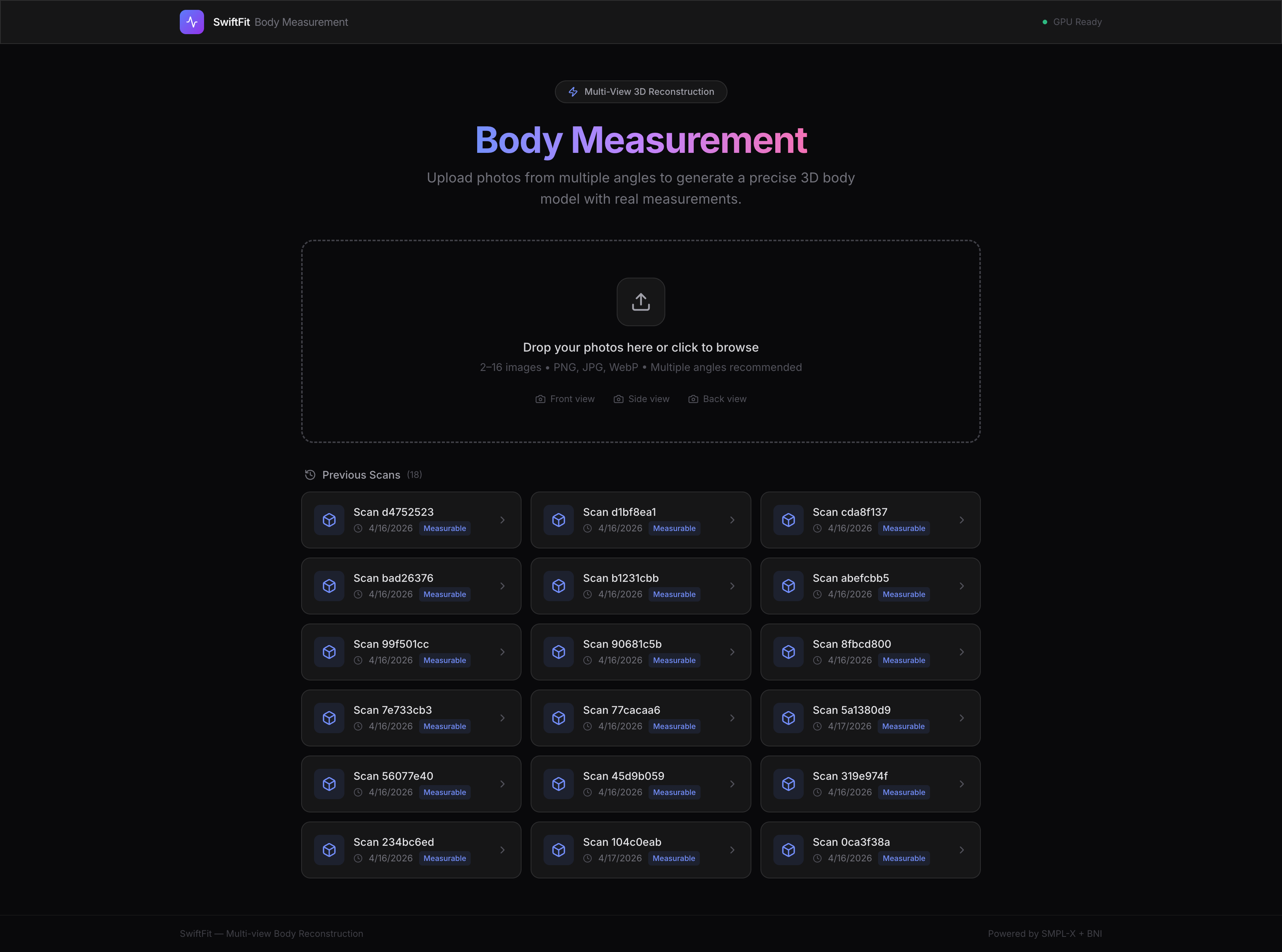
The problem. Online clothing returns are overwhelmingly a sizing problem. Existing "measure yourself" flows ask people to wrap a tape measure correctly — which they don't — or need depth sensors most phones lack.
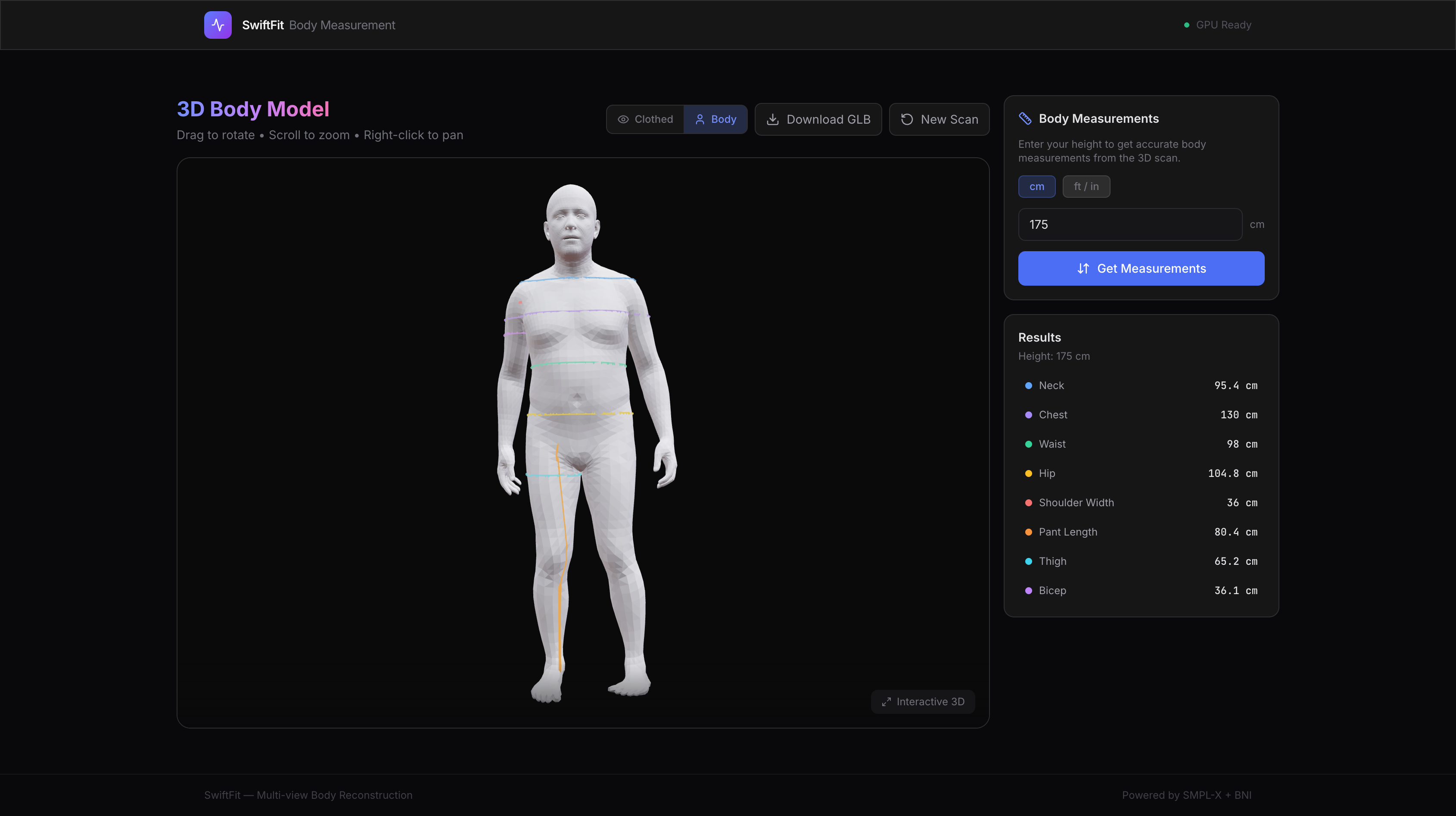
What it solves. Upload a few ordinary photos, enter your height, and SwiftFit reconstructs a metric-accurate 3D body model, reads real circumferences and lengths off it, and maps those to the correct size for any retailer's chart.
Challenges & how we overcame them
- Single-image body reconstruction is unstable across angles. We extended the ECON pipeline into MExECON, fusing multiple views through Joint Multi-view Body Optimization (JMBO) so one consistent SMPL-X body explains every photo — far more robust than per-image guesses.
- A parametric body is smooth; real bodies have surface detail. We predict clothed surface normals and recover fine geometry with bilateral normal integration and Poisson fusion, orchestrating PIXIE, PyMAF-X and Sapiens under a single CUDA inference graph.
- Heavy GPU inference feels broken if the user just stares at a spinner. The FastAPI backend streams live pipeline progress over WebSocket into an interactive React Three Fiber viewer — the user watches their model build, step by step.
- Where it stands: 83.4% reconstruction accuracy today, with active research pushing it higher.
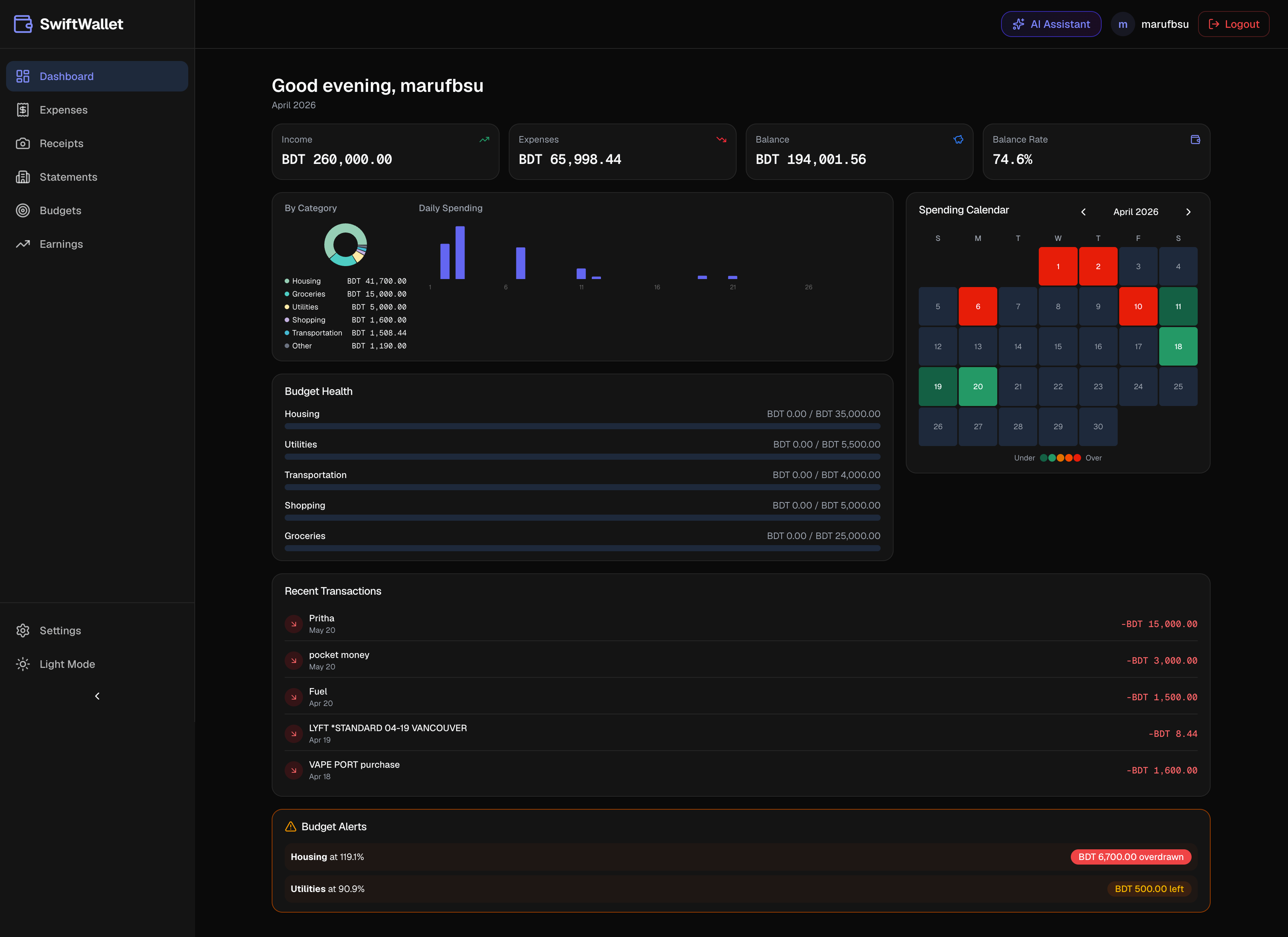
The problem. Personal budgeting dies on data entry. Nobody types in receipts, so spending data is always stale and incomplete — and bank statements arrive as messy PDFs.
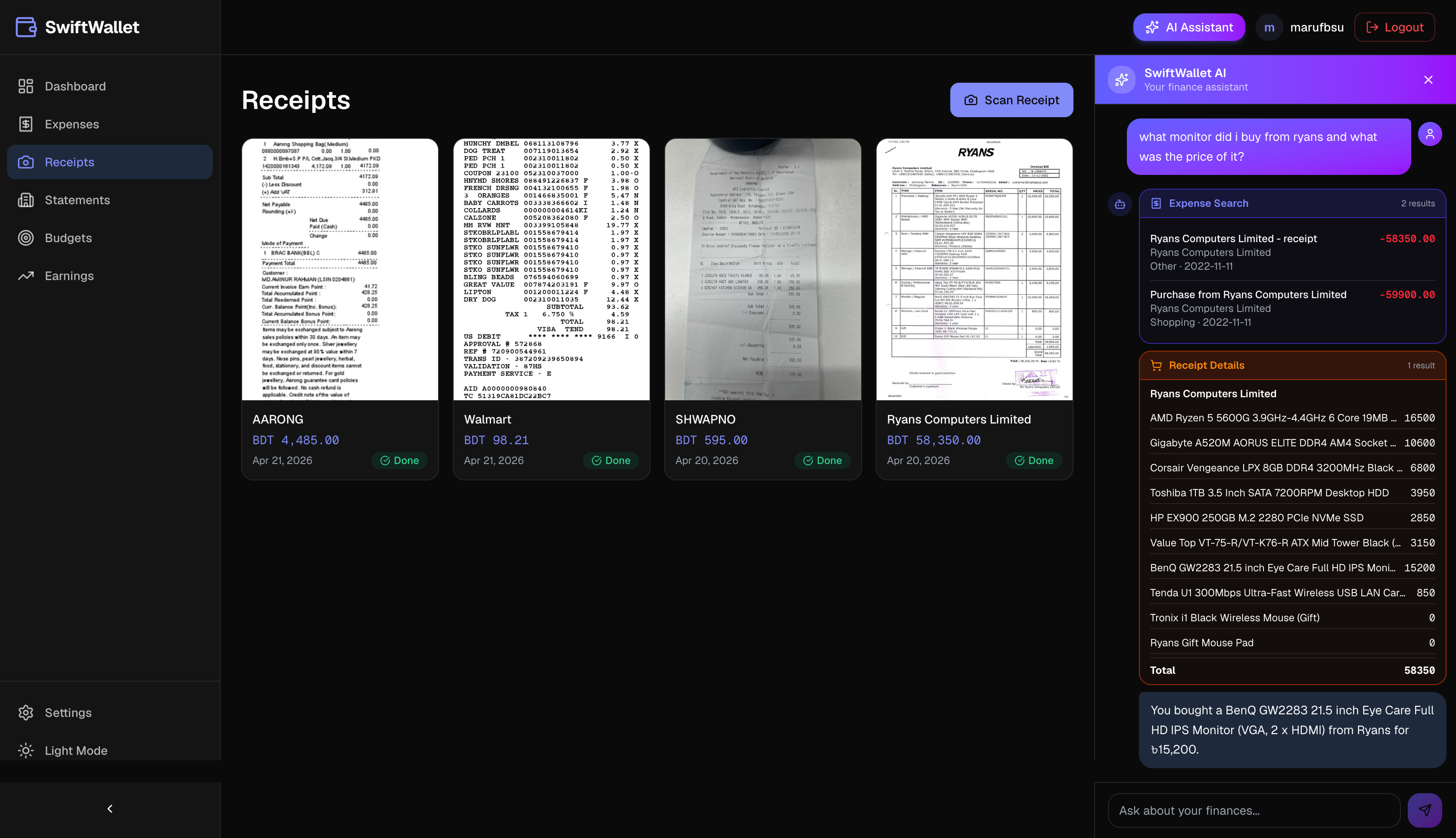
What it solves. Snap a receipt or drop in a statement; SwiftWallet turns it into clean, categorized transactions with zero manual entry — and lets you ask questions about your money in plain language.
Challenges & how we overcame them
- OCR on crumpled, low-light receipts is the make-or-break step. We run a dedicated GPU vision-OCR model and tuned the pipeline to 99.2% text-extraction accuracy — the foundation everything downstream depends on.
- Raw OCR text is not data. A Groq-hosted Llama-4 LLM parses merchant, date, totals and line items into a strict schema and classifies each item against the user's own categories — structured output, not a wall of text.
- AI parsing is too slow to block an upload. The full image → OCR → categorize → expense flow runs asynchronously on Celery workers (monitored via Flower), so the UI stays instant while inference happens in the background.
- Querying your finances should feel like a conversation. An agentic chat layer with function-calling tools answers "how much did I spend on groceries last month?" directly against the user's data.
The problem. Booking a doctor's appointment by phone means hold music and clinic hours. Voice assistants that do exist are English-first and stumble on Bengali — and most feel laggy and robotic, with awkward turn-taking.
What it solves. A fully voice-native assistant that books, reschedules and cancels appointments entirely in Bengali, reasoning about symptoms to route patients to the right specialist — conversational enough to feel like talking to a receptionist.
Challenges & how we overcame them
- Latency kills voice UX. We built the loop as isolated microservices — GPU faster-whisper STT → Groq tool-calling LLM → edge-TTS — and tuned it to process audio at 219× real-time speed, so spoken replies feel near-instant.
- Real conversations interrupt. VAD-gated segmentation plus barge-in / interrupt handling over bidirectional WebSockets let the user cut in mid-sentence, like a real exchange.
- An LLM shouldn't hallucinate which doctor treats what. We ground medical reasoning in a Bengali RAG knowledge base (ChromaDB + multilingual embeddings) that maps symptoms to specialists, then drive six concrete booking tools across 12 doctors with Redis-backed session memory.
- AI "magic" is hard to trust. A live React dashboard renders the entire agent trace — transcription, reasoning, tool calls, schedule updates — in real time, making every decision visible.
The problem. Enterprise knowledge is scattered — half-answers live in Confluence, Jira tickets, MongoDB records and a graveyard of PDFs and DOCX files. Employees waste hours hunting across tools for something a colleague already wrote down.
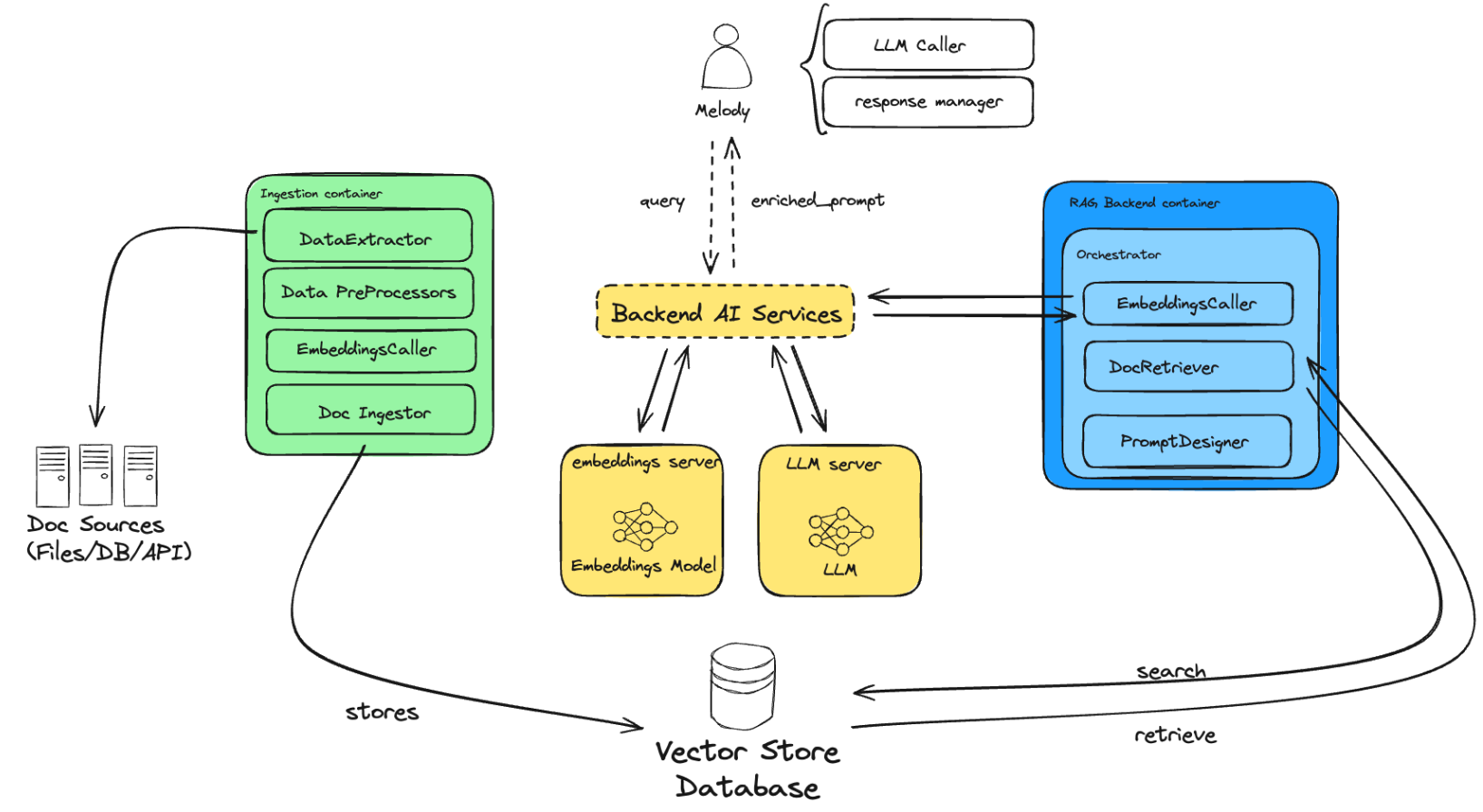
What it solves. A single RAG chat assistant that ingests all of those sources and answers questions in natural language with grounded, cited context — one place to ask, instead of five to search.
Challenges & how we overcame them
- A single retriever misses too much. Dense vector search alone returned plausible-but-wrong passages on enterprise jargon and ticket IDs. We combined TF-IDF + BM-25 + cosine similarity into a hybrid retriever, lifting retrieval performance 35% — lexical signals catch exact terms, semantic search catches intent.
- Many source formats, one pipeline. Confluence, Jira, MongoDB, PDF and DOCX each have their own structure; we normalized them into a unified chunked-and-embedded corpus so the retriever treats them uniformly.
- Shipping reliably at enterprise cadence. A full CI/CD flow on GitHub Actions with MLflow experiment tracking and K8s deployment cut build time 40%, making model and pipeline iterations routine rather than risky.
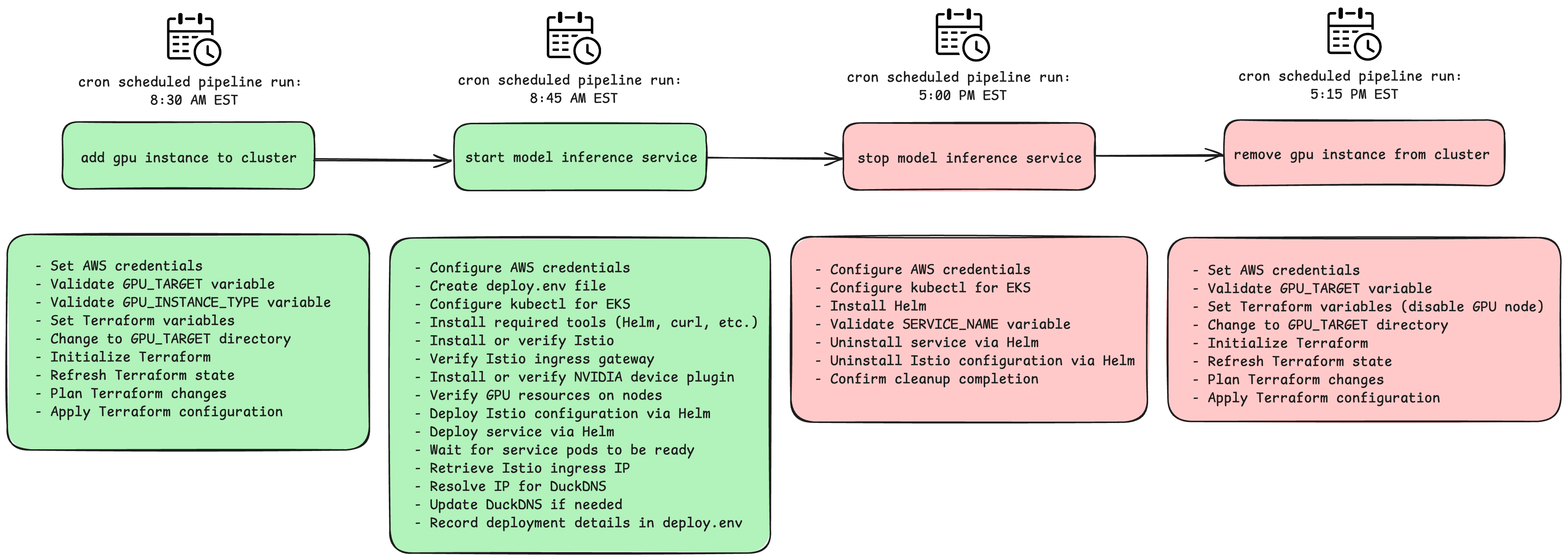
The problem. ML teams burn money on always-on GPU instances that sit idle between training runs — and provisioning the right GPU by hand, across providers, is slow and error-prone.
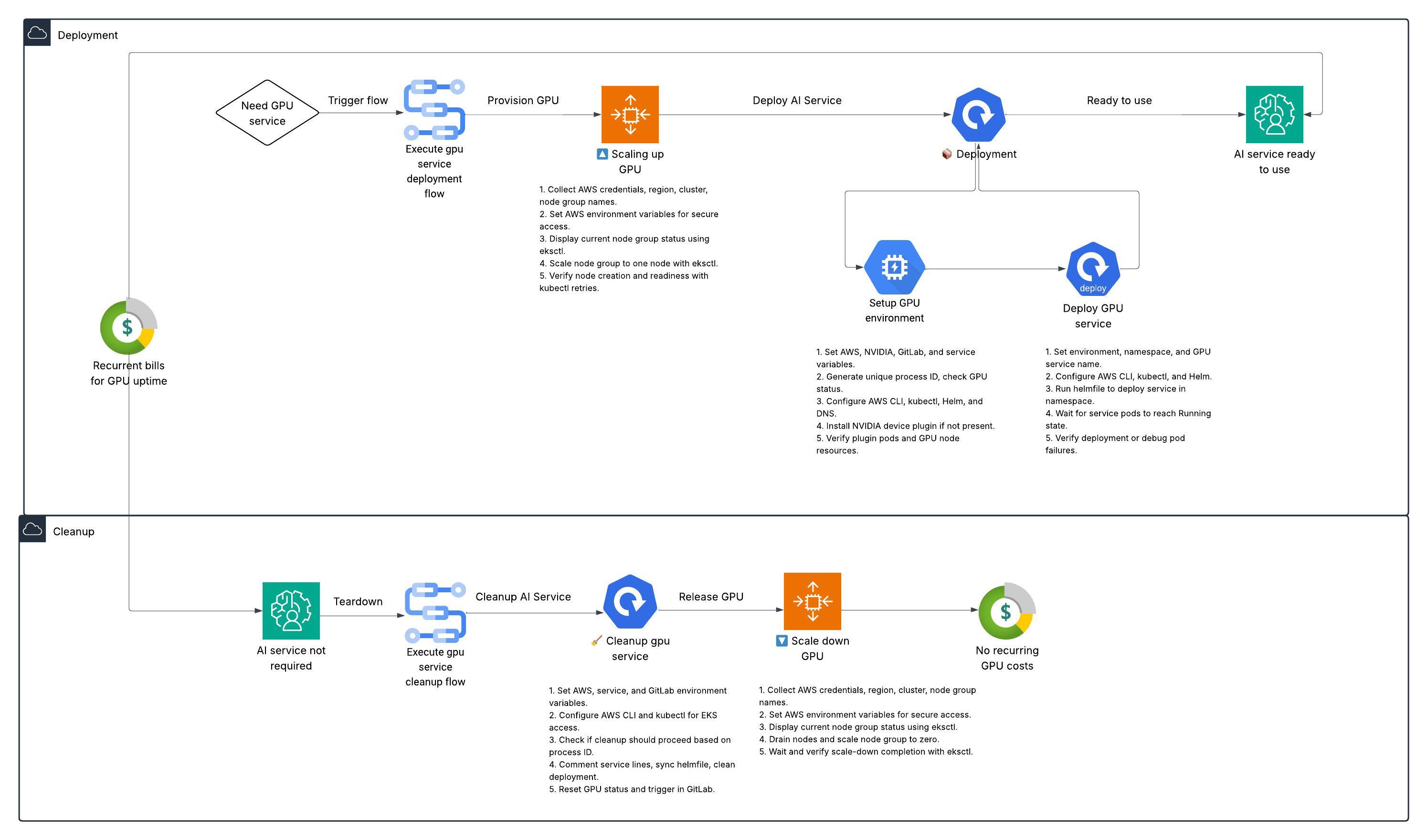
What it solves. Infrastructure that spins GPUs up on demand and tears them down when the job is done — provisioned as code, across multiple clouds — so teams pay for compute only while they use it.
Challenges & how we overcame them
- Idle GPUs are the cost sink. We replaced standing instances with Terraform-provisioned, on-demand GPUs integrated with Lambdalabs, cutting GPU spend 95%.
- No single provider has capacity or price locked down. We built multi-cloud SDK services that abstract provisioning across Lambdalabs and Runpod, so workloads land wherever capacity and cost are best — no vendor lock-in.
- Provisioning has to be repeatable, not artisanal. Infrastructure-as-code with K8s + Helm and GitLab CI turned GPU setup into a versioned, automated step instead of a manual ritual.
The problem. Bengali OCR lagged far behind English — a script with complex conjuncts and ligatures, and almost no large-scale, high-quality training data to learn from.
What it solves. A production OCR system, deployed at national scale (ocr.bangla.gov.bd), that reads Bengali documents accurately and fast.
Challenges & how we overcame them
- The data didn't exist. We curated the largest Bengali OCR dataset to date — the real unlock, since model quality is bounded by data quality for a low-resource script.
- Accuracy and speed usually trade off. Through R&D on detection/recognition architectures we pushed processing 32% faster while holding system errors under 1% — production-grade on both axes.
- Research has to survive production. CV and NLP models were hardened and deployed behind a public government service, where reliability is non-negotiable.
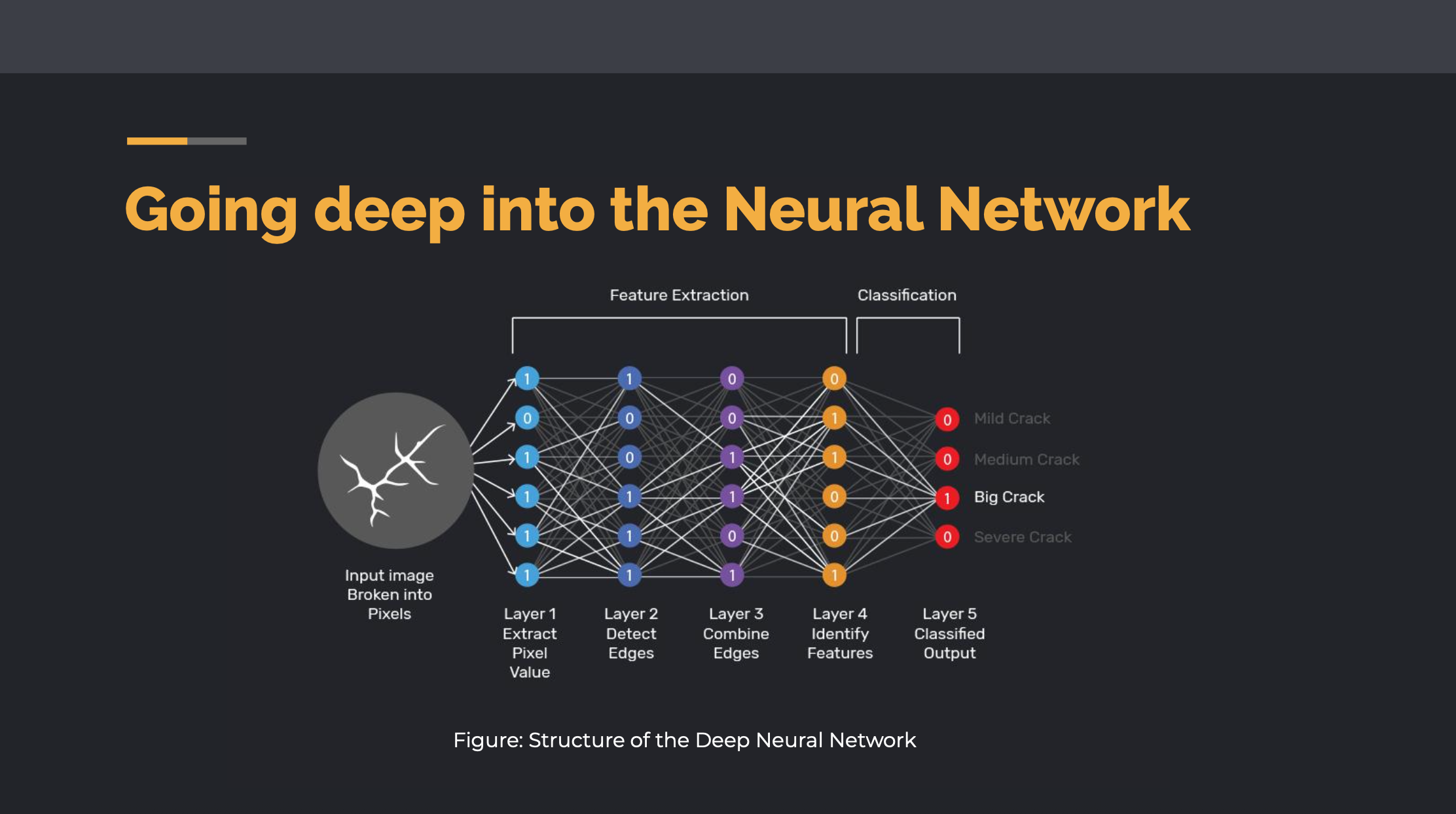
The problem. Road surveying for cracks is manual, slow and subjective — inspectors can't cover every mile, and assessments vary person to person.
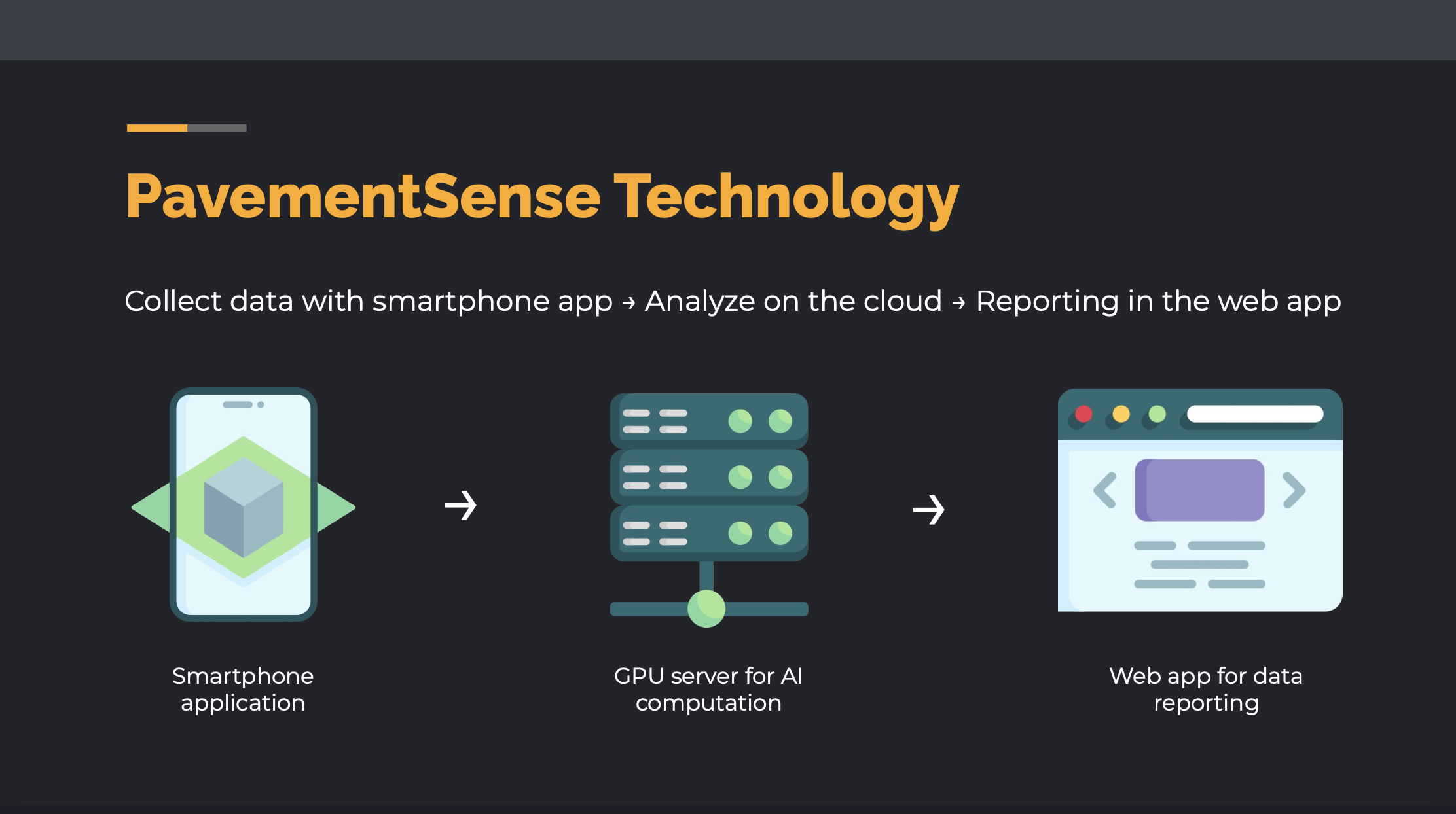
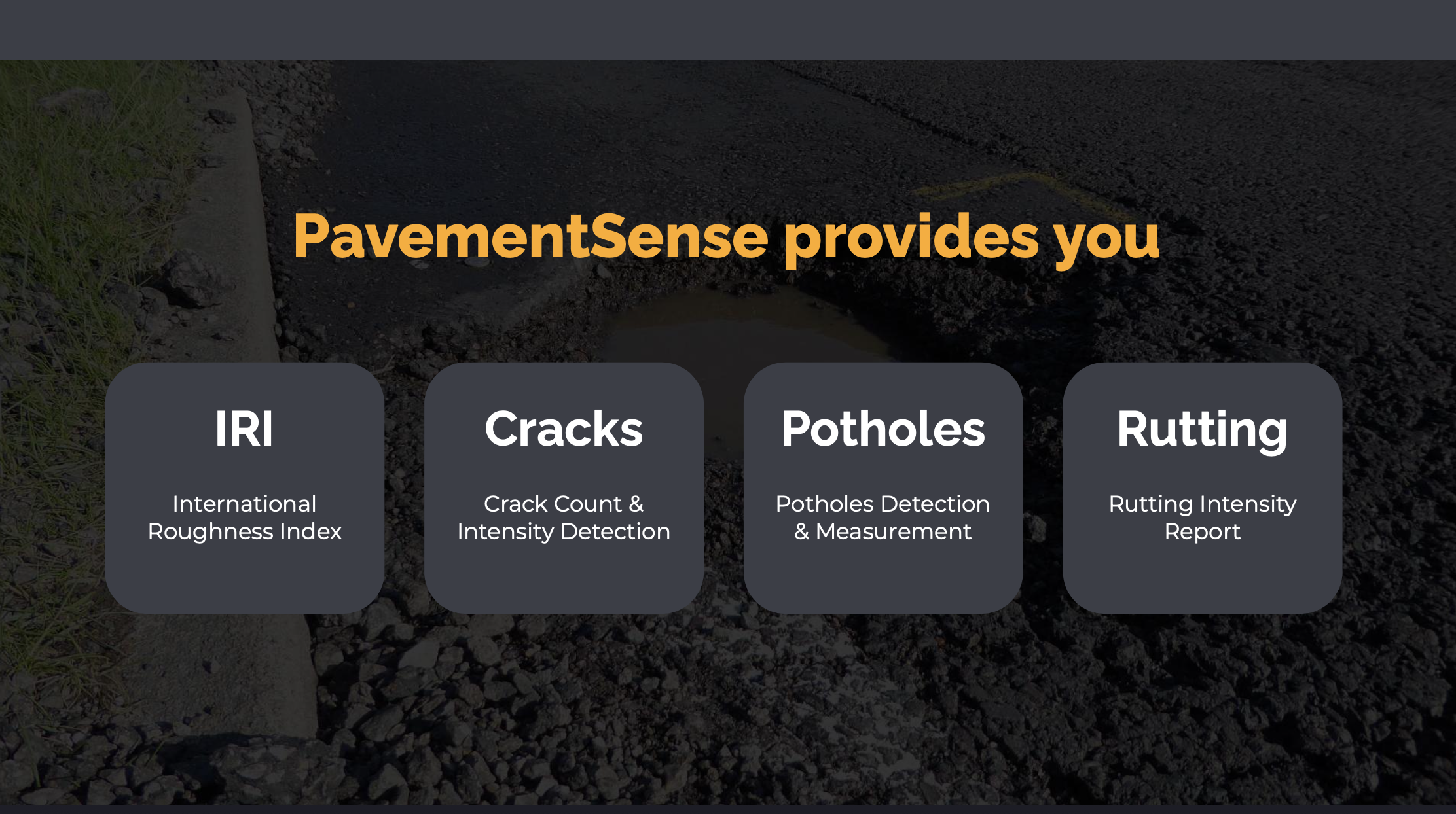
What it solves. An autonomous vehicle platform that detects pavement cracks in real time as it drives, producing consistent, automated road-condition data.
Challenges & how we overcame them
- Detection had to run on the move. An SSD-based detection network hit 96% accuracy while staying fast enough for real-time inference.
- Inference at the edge, not in a data center. We deployed on Nvidia Jetson TX2 mounted on the vehicle, doing collection and inference on-board — the same edge-first instinct behind later work like Argus.
- Rigorous enough to fund. The work was conducted as NSF REU Fellowship research at Boise State University, held to an academic standard of evaluation.
 Python
 TypeScript
 React
React
 TensorFlow
 PyTorch
 Docker
 K8s
K8s
 Terraform
 AWS
AWS
 GCP
GCP
 Postgres
 Redis
Redis
 FastAPI
 OpenCV
 Git
Git
 Linux
Linux